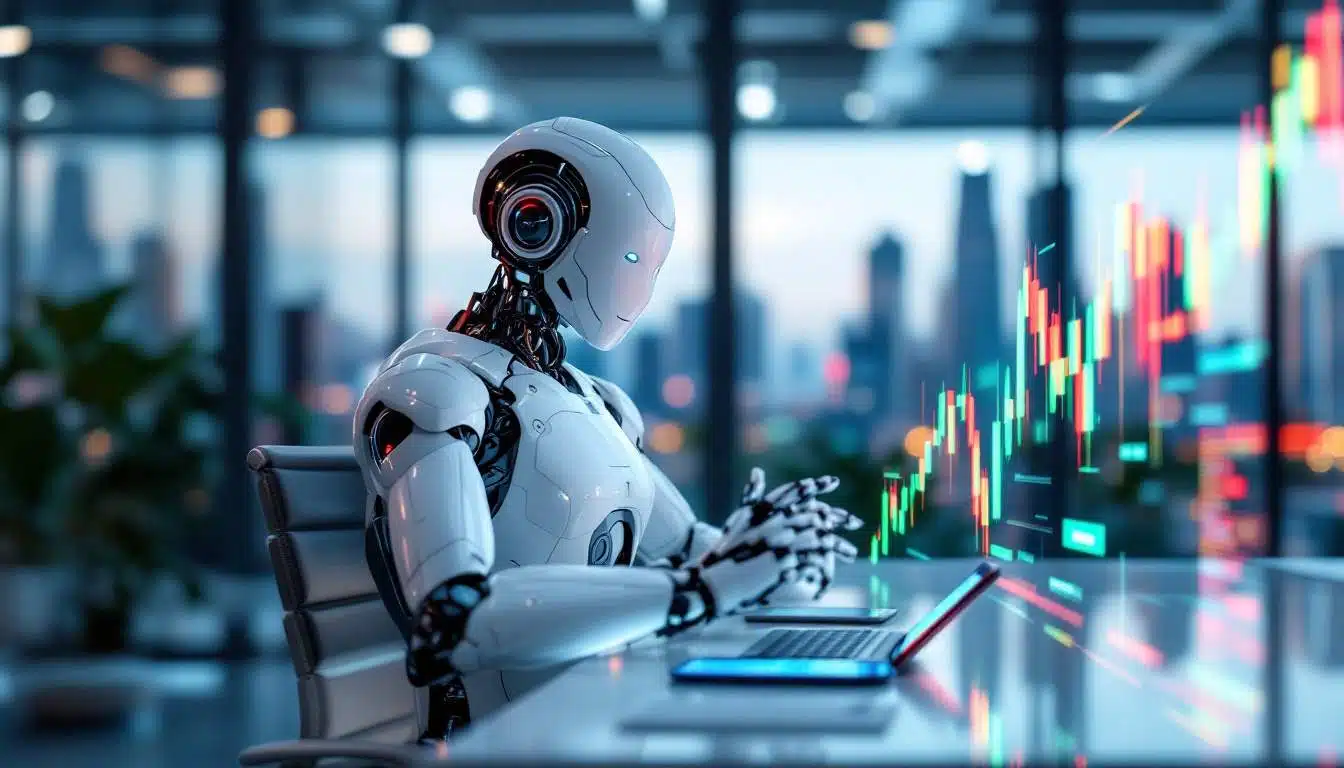
You Will Be Flooded with Promises to Let Artificial Intelligence Manage Your Money If You Search for “AI Investing” Online
I recently spent thirty minutes researching the alleged capabilities of AI-powered “trading bots” for managing investments. The findings were eye-opening.
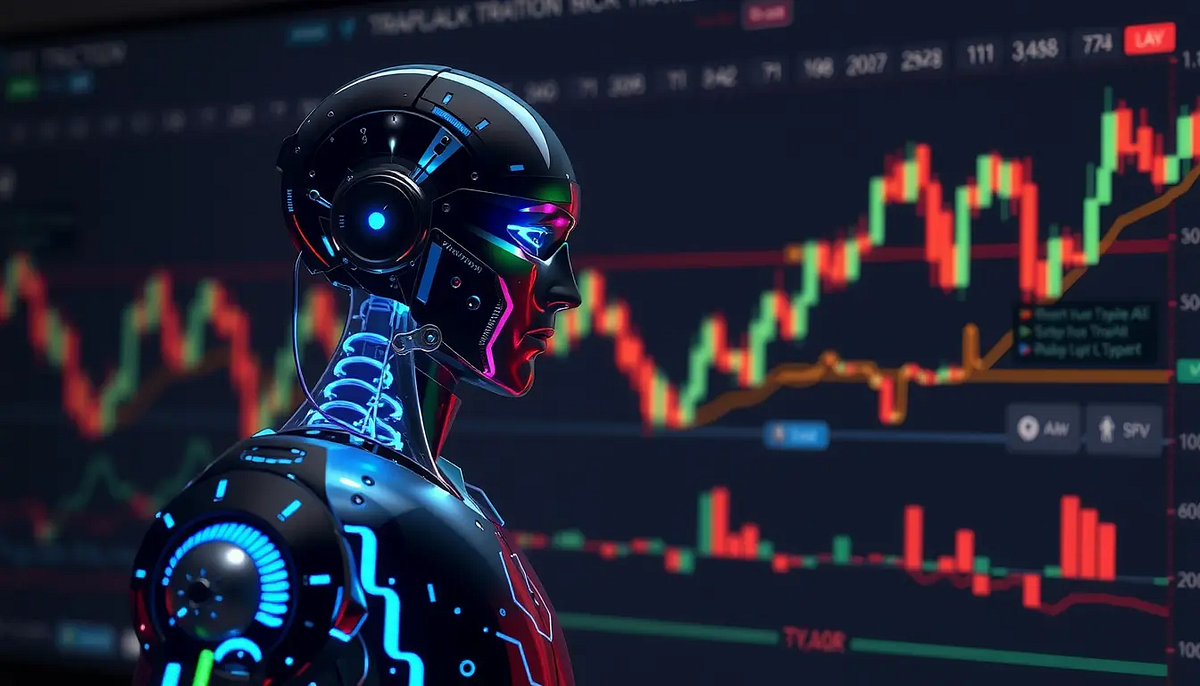
Regardless of whether these bots make decisions with human assistance or operate fully autonomously, reputable financial companies caution against relying on them — despite their many claims of exceptional returns.
A US survey conducted in 2023 revealed that almost one-third of investors would be comfortable letting a trading bot handle all of their financial decisions, despite the ongoing debates surrounding artificial intelligence.
Investors should exercise caution when using AI, according to John Allan, head of innovation and operations at the UK’s Investment Association. He highlights the gravity of investment decisions — which can significantly affect people’s long-term financial goals — and advises waiting until AI has had sufficient time to prove its efficacy. He does, however, acknowledge that human investment professionals will remain highly important for the foreseeable future.
It’s understandable that Mr. Allan would raise concerns about the possibility of expensive, highly qualified human investment managers being replaced by AI-powered trading bots. Trading with AI is still relatively new and comes with significant unknowns and challenges.
First and foremost, AI cannot predict the future any more accurately than humans can. Looking back over the last 25 years, even the most advanced AI systems have been unable to anticipate unexpected events like the 9/11 attacks, the COVID-19 pandemic, and the 2007–2008 financial crisis.
Elise Gourier, an associate professor of finance at ESSEC Business School in Paris and an expert in AI research, points to Amazon’s hiring practices in 2018 as a compelling example of AI going wrong.
“Amazon was one of the first companies to get caught out,” she explains. “They created an AI system to screen job applications, expecting it to process the thousands of resumes they were receiving automatically. The problem was that the AI had been trained predominantly on data from male employees — so the algorithm ended up systematically filtering out female candidates.”
Prof. Sandra Wachter, a senior research fellow in AI at Oxford University, describes another key risk: “hallucination” — when generative AI produces false or entirely fabricated information due to miscalculations. “Generative AI can invent facts and present them confidently,” she warns. “Without precise error detection, these flaws can be extremely difficult to identify.”
Prof. Wachter also cautions that automated AI systems could be vulnerable to “model inversion attacks” — a form of data breach in which hackers pose a series of targeted queries to the AI, hoping it will inadvertently reveal its underlying data or code.
There’s also the risk that AI investment tools could start to resemble the stock pickers once featured in Sunday newspapers — advisors who would recommend a handful of shares each Monday morning, only for those shares to rise in value immediately afterwards. Of course, this had less to do with genuine insight and more to do with millions of readers all rushing to buy the same stocks simultaneously.
So why are so many investors seemingly willing to hand over financial decision-making to AI, despite all these risks? According to Stuart Duff, a business psychologist at Pearn Kandola, some people simply place a higher level of trust in machines than in other humans. “They may assume AI is infallible — that it never makes mistakes or attempts to conceal losses,” he explains.
In reality, an AI investment tool is only as good as the decisions and reasoning of the people who built it. And if future unforeseen crises — similar to the 2008 financial crash or COVID-19 — occur, AI may find itself at a significant disadvantage, lacking the lived experience and adaptive judgement that seasoned human professionals bring to the table.
Read More: