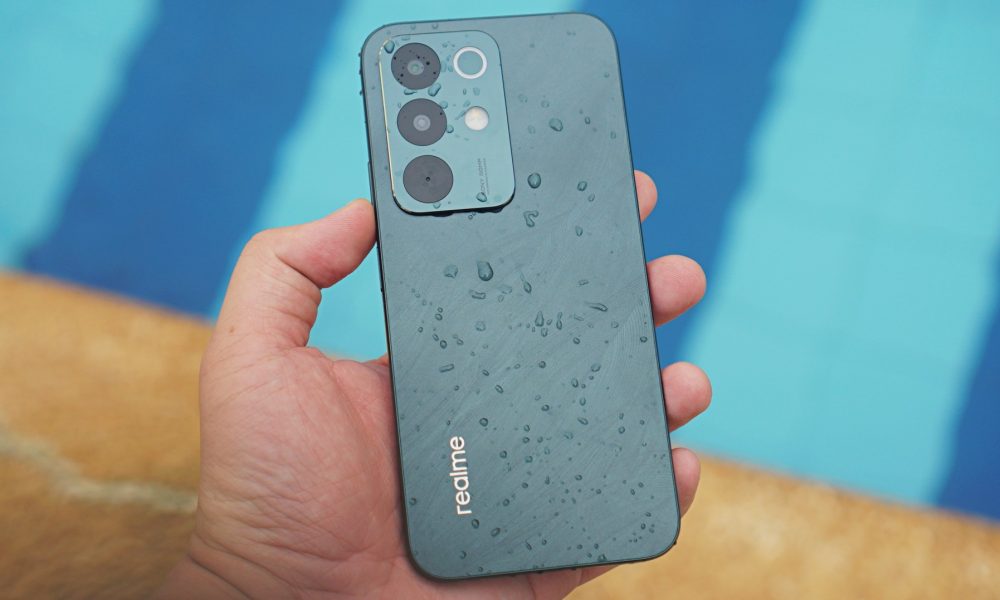
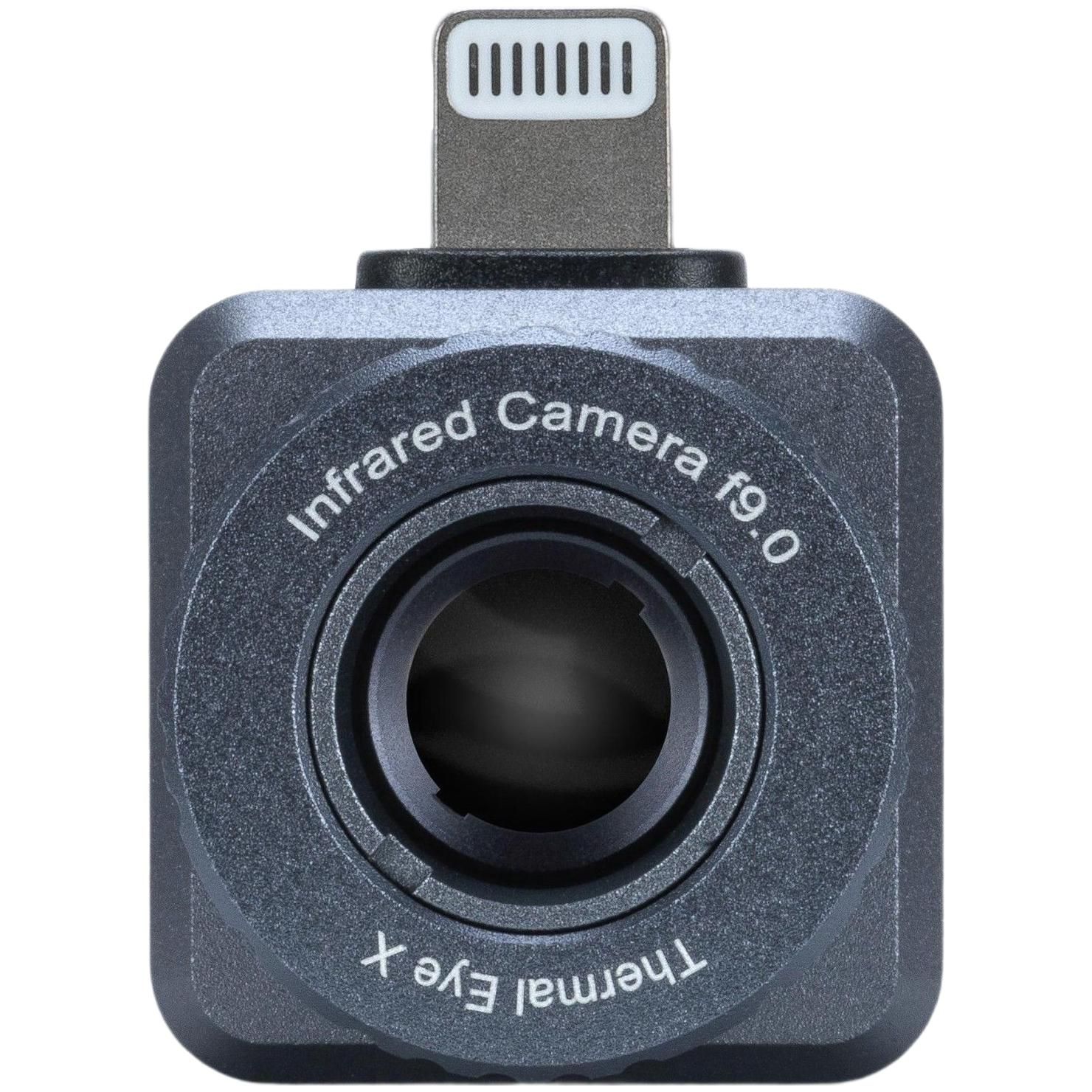
In the past, thermal imaging cameras were usually only available to those with specific corporate needs or military budgets — either too low in quality or too expensive for the average user.
That has changed with the rise of rugged mobile phones, which often integrate thermal imaging capabilities using FLIR Lepton sensors. Among the available options, the Xinfrared One XH09 stands out as a hardware add-on that works with both iOS and Android phones, using a unique sensor to deliver higher-fidelity thermal imaging performance.
At first glance, this camera appears very similar to its predecessor, the Xinfrared P2 Pro. However, the new design introduces a grip for easier photo and video capture, a variable-focus lens, and an upgraded resolution sensor.
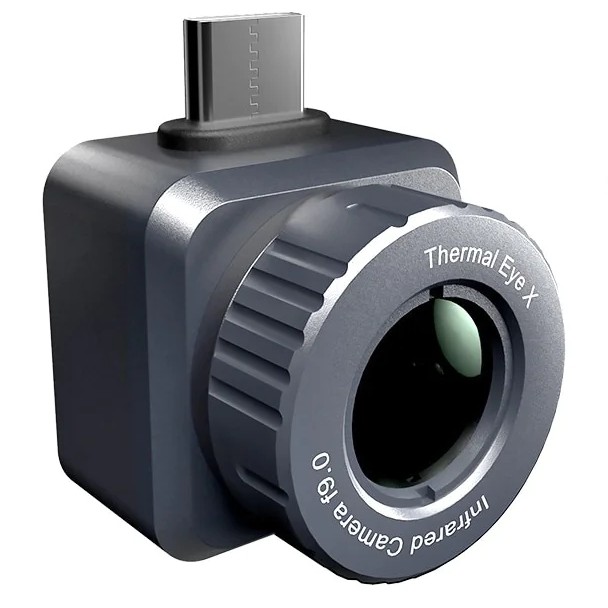
Using the camera is straightforward — simply plug it in and launch the Thermal Eye X app on your phone. The package also includes a handle and a short USB-C cable extender for a more comfortable experience.
In addition to the handle, Xinfrared provides a housing that allows the One XH09 to be mounted atop a rifle scope for hunting purposes. While this would give hunters a significant advantage and may only be relevant in regions with more permissive firearm regulations, it remains an available option.
This specific use also highlights the One XH09’s notably narrower field of view compared to many other thermal accessories — a characteristic that makes it particularly well-suited to outdoor activities like hunting, while still remaining versatile enough for tasks such as identifying heated pipes or detecting engine block cracks.
Overall, compared to the P2 Pro, the One XH09 represents a meaningful upgrade for Xinfrared, with compelling features that justify its higher price point.
How Much Does It Cost?
According to the manufacturer’s website, the Xinfrared One XH09 is priced at approximately $40 more than the InfiRay Xinfrared P2 Pro at launch. It is also available on Amazon for an additional $30 with next-day shipping. The retail price is $340 / £370.
Xinfrared One XH09 Specifications
| Model | Xinfrared One XH09 (for Android) |
|---|---|
| Resolution | 256×192 |
| Connection | USB-C |
| Accessories | Camera, USB cable, and phone bracket |
| Compatibility | Android 9.0 or above |
| Camera | Focal length: 9mm, FOV: 19.63° × 14.71° |
| Thermal Range | 0°C to 100°C |
| Thermal Accuracy | ±3°C |
| Weight | 18.5g |
| Dimensions | 23mm × 23mm × 23.8mm |
Design
The One XH09 camera comes packaged in a compact, well-designed pouch along with a short cable extension. Our test unit featured a USB-C connector intended for Android phones, though a Lightning connector variant compatible with Apple iOS is also available.
The camera can be attached directly to your phone or tablet facing either direction, though the included smartphone bracket mount provides a far better experience — holding both the phone and camera securely in the optimal position. The bracket also features a quarter-inch thread at the bottom for easy attachment to a photography tripod.
One minor shortcoming of the bracket is the absence of a Bluetooth shutter button. A dedicated button on the handle for recording video or capturing still images would significantly improve the workflow.
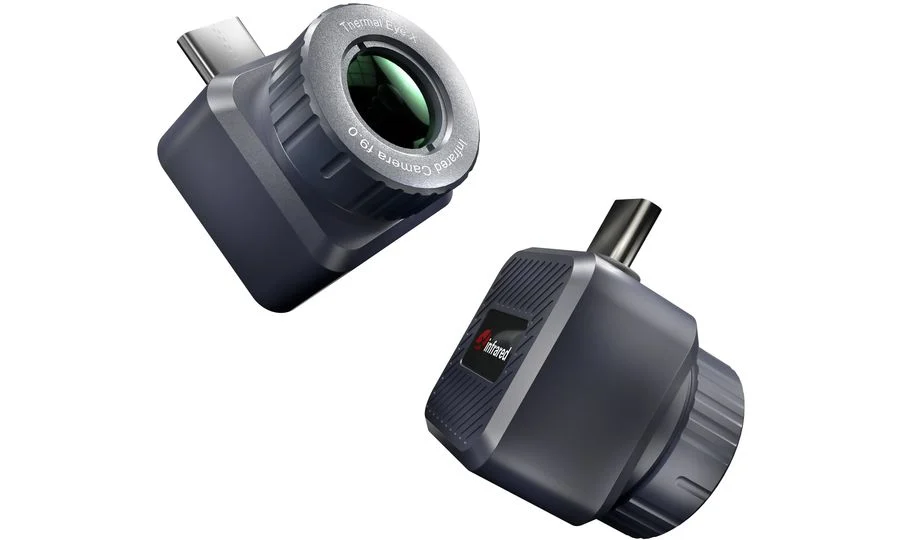
Measuring just 23 × 23 × 23.8mm, the camera is remarkably compact and features IP65-rated aluminum construction. It includes a rubber lens cover and manual focus achieved by rotating the front of the lens. Focus adjustment is reasonably straightforward when the camera is mounted on the bracket, though it may be more challenging with a rifle attachment — something we were unable to test.
Since the camera’s angle can vary depending on whether it’s mounted on the bracket or directly on the phone, the Thermal Eye X app allows you to set the correct orientation to ensure the image is never upside-down.
While the 256×192 resolution of the One XH09 sensor may seem modest at first glance, it compares very favorably to the FLIR Lepton 3.5’s 160×120 resolution. With 49,152 pixels versus 19,200, the One XH09 delivers more than twice the pixel density.
Software
The Thermal Eye X software is the latest version of a utility used across many Xinfrared systems, customized specifically for this camera. It enables still photo and video capture of thermal subjects and includes a range of tools for monitoring hot spots and displaying peak temperatures.
One notable drawback is screen lag when numerical temperature overlays are enabled, even on high-end smartphones — suggesting the software lacks hardware acceleration for these text overlays, which reduces capture fluidity.
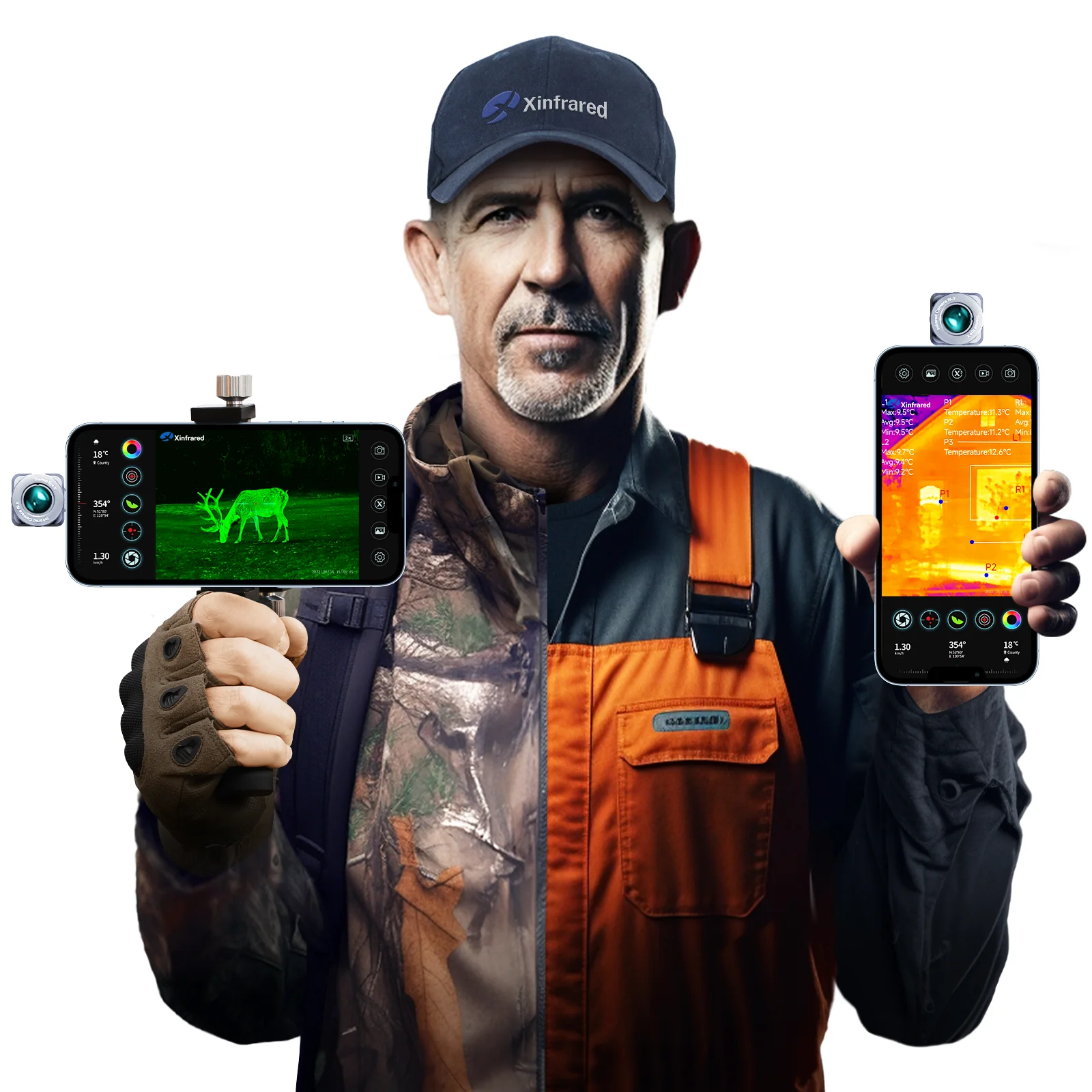
That said, the software has advanced considerably since the P2 Pro’s release and covers most of the features that thermal imaging users are likely to need. A wide range of color palettes is available, and users can designate specific surface types — such as skin, brick, or wet surfaces — to improve temperature reading accuracy.
One missing feature worth noting is a timed capture function. Without it, capturing a photo while simultaneously holding the bracket and adjusting focus requires a third hand. Voice activation simply redirected to the standard camera during our testing. A simple 10-second countdown timer, or a dedicated shutter button on the handle, would make precision capture significantly more practical.
Read More: Which Vlogging Camera Should You Invest in for 2024?
Xinfrared One XH09: Camera Performance
The One XH09 uses a sensor similar to the one found in the Xinfrared T2S Plus, but with one key difference: while the T2S Plus operates at 25Hz, the One XH09 runs at 50Hz — twice as fast. This higher refresh rate, combined with the narrower field of view, makes the One XH09 better suited for outdoor use where detecting movement is important.
Regarding power consumption, the camera begins drawing power as soon as it is plugged in, even when the app is not running. It’s therefore advisable to disconnect the camera when not in use to preserve battery life — particularly on phones with smaller batteries. Using it with a tablet may be the most practical way to avoid running out of power during extended sessions.
One limitation compared to a phone’s built-in camera is the inability to enhance images by combining thermal data with standard optical exposures, as the phone has no way of knowing the One XH09’s orientation. A picture-in-picture (PIP) mode is available as an alternative, which helps provide useful visual context alongside the thermal image.
Even at a respectable resolution, thermal images can still appear pixelated. To address this, Xinfrared has introduced the X3 feature, which leverages the 50Hz cycle to capture more frames and use the additional data to produce a sharper final image. In practice, this oversampling works well and noticeably improves image clarity — though results vary depending on subject distance. The narrower field of view can make framing tight when subjects are close together, but performance improves at greater distances.
Temperature accuracy is rated at ±3°C by the manufacturer. This level of precision is not suitable for medical assessments and should not be relied upon for such purposes.
Overall Score: 4.5/5
The Xinfrared One XH09 is an excellent solution for outdoor thermal imaging tasks. The camera does draw power continuously while connected, which can noticeably impact battery life — especially on phones with smaller batteries. For extended use, pairing it with a tablet is the most reliable way to ensure you don’t run out of power.